Fahad Saad Z. Alanazi¹, Abdullah Khalid Abusoliman²٭, Areej Abdulmonem H. Abu Hussain³, Najla Naif Alosaimi⁴, Mawaddah Hamed Aljohani⁵, Zainab Saeed H. Alzain⁶, Sadeem Talal S. Alanazi⁷, Suliman Mansour Aldhalaan⁸, Jori Abdulmonem M. Alsulami², Meshari Naif M. Almuqati⁹, Raghad Sayyaf Alshahrani¹⁰, Abdulaziz M. Alzanbaqi², Eman Mohammed H. Mohayya¹¹.Point-of-Care Ultrasound in Family Medicine: A Narrative Review of Clinical Applications, Training, and Implementation. DawnMed Journal of Medical ScienceVolume 2, Issue 3:p: 12-26,2026.| DOI: 10.64039/djms.2026.2303
Point-of-Care Ultrasound in Family Medicine: A Narrative Review of Clinical Applications, Training, and Implementation
Fahad Saad Z. Alanazi¹, Abdullah Khalid Abusoliman²٭, Areej Abdulmonem H. Abu Hussain³, Najla Naif Alosaimi⁴, Mawaddah Hamed Aljohani⁵, Zainab Saeed H. Alzain⁶, Sadeem Talal S. Alanazi⁷, Suliman Mansour Aldhalaan⁸, Jori Abdulmonem M. Alsulami², Meshari Naif M. Almuqati⁹, Raghad Sayyaf Alshahrani¹⁰, Abdulaziz M. Alzanbaqi², Eman Mohammed H. Mohayya¹¹
¹ Family and Community Medicine Department, Northern Border University, Arar, Saudi Arabia.
² King Abdulaziz University, Jeddah, Saudi Arabia.
³ King Fahad Specialist Hospital, Dammam, Saudi Arabia.
⁴ Vision College, Jeddah, Saudi Arabia.
⁵ Taibah University, Medina, Saudi Arabia.
⁶ Imam Abdulrahman Bin Faisal University, Dammam, Saudi Arabia.
⁷ Northern Border University, Arar, Saudi Arabia.
⁸ Hafar Albatin Cluster, Hafar Al-Batin, Saudi Arabia.
⁹ Umm Al-Qura University, Makkah, Saudi Arabia.
¹⁰ University of Bisha, Bisha, Saudi Arabia.
¹¹ King Khalid University, Abha, Saudi Arabia.
Corresponding author: ٭Abdullah Khalid Abusoliman
King Abdulaziz University, Jeddah, Saudi Arabia.
Email: Researchup9988@gmail.com
Background: In family medicine, point-of-care ultrasound (POCUS) is fast becoming an indispensable tool for both diagnosis and procedure. By providing focused bedside imaging that complements the history and physical examination, it enables clinicians to form a more complete clinical picture. Its adoption in primary care has been driven by advances in portable technology, the expansion of residency training, and a growing evidence base supporting clinician-performed ultrasound. However, the existing evidence remains fragmented across the domains of clinical application, education, governance, and emerging technology. We set out to review the current literature to establish where POCUS stands in family medicine and what supports its integration into day-to-day practice.
Methods:
We conducted a narrative review of the literature. We searched PubMed using six complementary thematic strategies spanning clinical applications, education, training, quality assurance, and emerging technology. Consistent with a narrative review, studies were selected purposively for their relevance to these themes rather than through an exhaustive search. Peer-reviewed studies were screened against predefined relevance criteria, and key data were extracted using a structured template. Given the methodological heterogeneity of the included studies, the findings were synthesised narratively.
Results:
The literature indicates that POCUS is being adopted across a broad range of indications in family medicine, including musculoskeletal, abdominal, cardiovascular, and respiratory assessment, as well as vascular access, preventive screening, and office-based procedures. Across studies, POCUS was consistently associated with improved bedside assessment and greater procedural accuracy, supporting more confident clinical decision-making. Successful implementation, however, depends on more than equipment: the evidence highlights the need for structured, competency-based education with supervised training, institutional support, and sustainable reimbursement models. Emerging innovations — including handheld devices, tele-ultrasound, artificial intelligence for image interpretation, and digital learning — may further support the use of POCUS in primary care.
Conclusion:
Contemporary evidence supports POCUS as an increasingly valuable component of comprehensive family medicine practice. However, sustainable integration requires more than access to technology; it depends on coordinated investment in physician education, clinical governance, and supportive health policy. Future research should prioritise economic evaluation, patient-centred outcomes, and the validation of emerging technologies to support the safe and equitable expansion of POCUS in primary care.
1. Introduction
In healthcare systems the world over, primary care is the bedrock of service delivery. It is where patients with a wide array of acute and chronic conditions can expect accessible, continuous and patient-centred attention. For those with undifferentiated symptoms, the family physician is often the first point of contact, tasked with making prompt diagnostic and management decisions in settings where resources are not unlimited. Yet the efficiency of this model is under constant strain from mounting costs, larger patient numbers and slow access to imaging, which underscores the value of having diagnostic tools on hand that do not impede workflow (1–3).
Point-of-care ultrasound (POCUS) represents one of the more significant technological developments in contemporary primary care. With the proliferation of portable and handheld devices, it has become increasingly feasible for family physicians to incorporate ultrasound into routine practice. Rather than sending a patient to radiology for a conventional scan, POCUS allows the clinician to obtain and interpret focused images at the bedside during the encounter itself, answering questions and guiding management in real time as part of the history and physical examination (4–6).
Over the last decade, the role of POCUS in family medicine has grown considerably. The literature documents its use in everything from musculoskeletal and abdominal complaints to cardiovascular and respiratory assessment, as well as in office procedures. The evidence shows that a suitably trained family physician can rely on POCUS to strengthen diagnostic confidence, make decisions sooner and streamline referrals without compromising continuity of care (5, 7–9).
This trend has had a knock-on effect on medical education. Residency and professional development programmes have been quick to add structured ultrasound curricula to their offerings. While national surveys point to an appetite among both residents and practitioners for this training, they also reveal obstacles to wider roll-out, such as uneven curriculum design, variable faculty expertise and limited equipment access (10–12).
Physician training, however, is only one component. Sustainable use of POCUS also requires sound governance and policy, including quality assurance, clear competency standards, documentation protocols, appropriate reimbursement, and institutional support for faculty development. Without these, studies suggest the safe and effective integration of clinician-performed ultrasound cannot be ensured (4, 8, 13, 14).
Emerging technology is expected to change the landscape further. From AI-assisted interpretation to tele-ultrasound and cloud-based systems, there is potential to broaden access to diagnostics in resource-poor as well as urban environments. At present, however, robust data on the long-term efficacy and ethical considerations of these tools remain limited, and further research is required (5, 6, 15).
Although much has been written on the educational aspects or particular clinical uses of POCUS, few reviews have brought together the whole picture for family medicine. Most have been organised by organ system or procedure, leaving out implementation science and governance. As a result, a gap remains in the evidence available to clinicians, educators and policymakers alike. This narrative review is designed to address that gap. We set out to examine the full range of contemporary evidence from clinical application and competency building to quality assurance and technological innovation — to offer a resource that can help all stakeholders in the field move towards a more effective and sustainable use of POCUS in practice.
2. Materials and Methods
2.1 Study Design
We carried out this work as a narrative review of the literature so as to provide a transparent and thorough overview of the current evidence. Our objective was to synthesise the current evidence on how point-of-care ultrasound (POCUS) is being used in family medicine, looking in particular at clinical use, education and competency development, quality assurance, implementation and emerging technological innovations.
2.2 Search Strategy
The PubMed database was searched on 25 June 2026 given its breadth of biomedical and clinical coverage. The review draws on literature published between 1992 and June 2026. Consistent with a narrative review, studies were selected purposively for their relevance and contribution to the review’s themes rather than through an exhaustive or fully reproducible search. Both Medical Subject Headings (MeSH) and free-text terms were used for point-of-care ultrasound (POCUS), primary care, general practice, artificial intelligence, quality assurance, and related concepts. To maximise the sensitivity of the search, six complementary search strategies were developed to cover the major themes of the review:
The general application of POCUS in family medicine.
Education and competency.
Clinical applications.
Barriers to and means of implementation.
Governance and quality assurance.
Artificial intelligence and emerging technology.
2.3 Eligibility Criteria
For a study to be considered, it had to be an English-language publication in a peer-reviewed journal that employed an appropriate design (quantitative, qualitative, observational, experimental or mixed-methods) and investigated POCUS in the context of family medicine or primary care while addressing one of our set domains. We excluded duplicate records, studies involving veterinary subjects, and editorials, letters, opinion pieces or conference abstracts with no original data. We also excluded studies dealing only with hospital specialties that had no bearing on family medicine.
2.4 Study Selection
Once the search was complete, we exported the results from PubMed into CSV files and consolidated them in a master database. Duplicates were removed by manual check of PMIDs, DOIs and titles. We then applied a two-stage selection process: titles and abstracts were screened against the eligibility criteria first, and promising records were read in full. Selection at this stage was guided by each study’s relevance and contribution to the review’s themes.
2.5 Data Extraction
For each study, we recorded the following information: first author; publication year; country; study design; study setting; population characteristics; primary POCUS application; educational or implementation focus; key findings; and reported limitations. The extracted information formed the basis for the thematic synthesis presented in the Results section.
2.6 Quality Assessment
In interpreting the evidence, we took into account the broad methodological strengths and limitations of each study, such as the transparency of reporting, study design, and sampling. Consistent with a narrative review, no formal critical-appraisal instrument or risk-of-bias assessment was applied.
2.7 Data Synthesis
Given the methodological diversity of the studies, we synthesised the evidence narratively and thematically. We organised the evidence under five headings: clinical uses of POCUS; education and competency; implementation in family medicine; quality assurance and governance; and artificial intelligence and future directions. This allowed us to identify recurring patterns, evidence gaps, and differences or challenges in implementation across the literature.
3. Results
3.1 Study Selection
Our search of the literature identified a number of relevant publications on the use of point-of-care ultrasound (POCUS) in primary and family care across the six thematic strategies. We exported all records from PubMed into a master database and removed duplicates by checking DOIs, PMIDs and titles, with a manual pass for accuracy. Titles and abstracts were then screened against the eligibility criteria, and promising articles underwent full-text review. We excluded editorials, opinion pieces, conference abstracts and duplicate work, along with studies with insufficient methodological detail or those concerned only with hospital specialties having no bearing on family medicine. The remaining studies formed the body of our narrative synthesis.
3.2 Characteristics of Included Studies
The studies reviewed span 2018 to 2026 and illustrate how rapidly POCUS has evolved in family medicine over the past decade. The literature shows a clear move away from early feasibility testing towards more far-reaching work on curriculum, reimbursement, governance, preventive screening and emerging technologies.
We found considerable diversity in the evidence base, from national surveys and cross-sectional work to observational studies, educational interventions and consensus or position papers (3–5, 10–12). This mix of designs allowed us to evaluate the clinical utility of POCUS as well as the policy and organizational dimensions of its integration.
Geographically, the studies are drawn from North America, Europe, Africa and elsewhere, reflecting the worldwide interest in bringing POCUS to primary care. While implementation may differ from one system to another, a common thread runs through the work regarding the need for institutional support, physician competency and ongoing professional development (1, 2, 6, 14, 16).
The literature could be distilled into five themes: (1) clinical applications of POCUS in family medicine; (2) competency and education; (3) primary care implementation; (4) governance and quality assurance; and (5) future directions and emerging technology. These structure the narrative that follows. The characteristics of the included studies are summarised in Table 1.
Table 1. Characteristics of included studies.
Author (Year)
Country
Study Design
Primary Focus
Key Findings
Hall et al. (2020) (10)
United States
National survey (CERA)
Residency education
Demonstrated increasing incorporation of POCUS into family medicine residency programmes while identifying variability in curriculum structure, faculty expertise, and resource availability.
Myklestul et al. (2020) (1)
Norway
Cross-sectional study
Clinical implementation
Reported growing adoption of POCUS in general practice, particularly for focused diagnostic assessment, while highlighting barriers related to training and equipment accessibility.
Johnson et al. (2021) (11)
United States
Survey study
Resident education
Reported positive resident attitudes toward POCUS and identified structured education and supervised practice as major determinants of competency development.
Løkkegaard et al. (2020) (2)
Denmark
Observational study
Primary care implementation
Demonstrated increasing utilization of POCUS among general practitioners and emphasized the importance of standardized training and clinical governance.
Shen-Wagner et al. (2021) (13)
United States
Health policy analysis
Billing and reimbursement
Examined reimbursement pathways for family medicine POCUS and emphasized the importance of documentation and standardized billing practices.
Capizzano et al. (2022) (3)
United States
Review
State of family medicine POCUS
Summarized current clinical applications, implementation challenges, educational needs, and opportunities for broader integration into family medicine practice.
Carrera et al. (2022) (4)
International
Review
Benefits and barriers
Identified physician training, equipment access, institutional support, and healthcare policy as major determinants of successful POCUS implementation in primary care.
Frasure et al. (2020) (7)
United States
Clinical review
Clinical applications
Described the expanding use of POCUS for musculoskeletal, abdominal, soft tissue, vascular, and procedural applications commonly encountered in family medicine.
Russell et al. (2023) (17)
Canada
Educational study
Tele-ultrasound
Demonstrated the feasibility of tele-ultrasound for physician education, mentorship, and remote clinical support.
Bishop et al. (2024) (16)
Kenya
Educational intervention
Residency curriculum
Evaluated implementation of a structured POCUS curriculum within a family medicine residency programme and reported improvements in learner competency.
Hui (2025) (6)
United States
Practice report
Academic family medicine
Demonstrated successful integration of POCUS into academic family medicine practice while emphasizing faculty development and longitudinal competency.
Tierney et al. (2025) (5)
United States
Narrative review
Outpatient POCUS
Summarized contemporary outpatient applications of POCUS and highlighted advances in handheld ultrasound technology and clinical implementation.
LeFevre (2025) (8)
United States
Clinical review
Prevention and screening
Discussed expanding preventive and screening applications of POCUS, particularly within comprehensive primary care practice.
Erickson (2025) (15)
United States
Perspective
Future of POCUS
Examined current challenges and future opportunities influencing the continued evolution of POCUS within family medicine.
Paulus (2026) (9)
United States
Validation study
AAA screening
Validated the use of family physician-performed POCUS for abdominal aortic aneurysm screening and demonstrated its feasibility within primary care.
Homar et al. (2026) (12)
Europe
Position paper
Education and governance
Proposed standardized educational frameworks and competency recommendations for teaching POCUS in general practice across Europe.
Long (2026) (14)
United States
Policy review
Reimbursement and governance
Examined policy, reimbursement, governance, and sustainability considerations supporting long-term implementation of POCUS.
Kiss-Kovács et al. (2026) (18)
International
Clinical study
Heart failure diagnosis
Demonstrated the potential value of focused cardiac ultrasound for improving early recognition of heart failure in primary care.
3.3 Clinical Applications
Of all the themes identified, clinical applications were by far the most prominent, reflecting how thoroughly point-of-care ultrasound (POCUS) is being woven into routine family medicine. The evidence suggests that POCUS is increasingly used as an extension of the physical examination and history-taking rather than solely as an imaging add-on. In day-to-day consultations, family physicians are turning to it to make better diagnostic decisions, support procedural work, perform preventive screening and manage patients with greater efficiency and accuracy (3–6).
Musculoskeletal complaints were among the most frequently reported areas of application, including tendon and ligament injuries, bursitis, joint effusions and soft tissue infections. POCUS is also widely used to guide office-based procedures such as joint aspiration and corticosteroid injection. Ultrasound guidance reduces reliance on blind techniques and unnecessary referrals, improving physician confidence and localising pathology with greater precision (5–7).
In the thoracic and respiratory domain, for patients presenting with dyspnoea or suspected pneumonia, pleural effusion, or pneumothorax, lung ultrasound provides a rapid bedside assessment that the physical examination alone cannot match, allowing earlier differentiation of conditions in the community or outpatient setting. As portable devices become more common, incorporating this into a consultation is increasingly feasible (5, 6).
Abdominal applications are similarly well supported. Primary care physicians have found abdominal ultrasound useful for renal pathology, urinary retention, hepatobiliary disorders and abdominal aortic aneurysm screening. Recent work validates the family physician’s role in focused abdominal scans, provided appropriate training and competency, enabling earlier detection of disease and reducing referral-related delays (5, 8, 9).
Cardiovascular applications have received growing attention. Focused cardiac ultrasound can help family physicians assess ventricular function, pericardial effusion, or intravascular volume early in the evaluation of patients with cardiovascular symptoms. New evidence supports its use in flagging heart failure early in primary care, opening referral pathways and prompting quicker treatment. Nonetheless, the literature emphasises that it is an adjunct and not a substitute for a full echocardiogram when one is indicated (5, 6, 18).
Procedurally, POCUS has proven its value in the office. Whether for vascular access, abscess drainage or foreign-body localisation, the studies show that ultrasound improves procedural precision and patient comfort, as well as clinician confidence (3, 6, 7).
There is also a shift toward preventive applications. Focused ultrasound is being used for risk assessment in high-risk groups, for instance in aortic aneurysm screening, marking a move from purely reactive diagnostics towards a more proactive model of longitudinal care (8, 9).
In sum, POCUS is a versatile instrument in the primary care toolkit. However, the reviewed evidence indicates that the safety and quality of its use depend on adequate training, standardised competency, and sound clinical governance which motivates a closer look at the educational structures needed to sustain its safe integration into family medicine.
Table 2. Clinical applications of POCUS in family medicine.
Clinical Application
Clinical Use in Family Medicine
Reported Benefits
Representative Studies
Musculoskeletal Disorders
Evaluation of tendon injuries, bursitis, joint effusions, ligament injuries, soft tissue infections, and guidance for musculoskeletal injections.
Improved diagnostic confidence, enhanced procedural accuracy, reduced unnecessary referrals, and greater physician confidence during office-based procedures.
(5–7)
Respiratory Assessment
Assessment of pneumonia, pleural effusion, pulmonary oedema, pneumothorax, and evaluation of patients presenting with dyspnoea.
Faster bedside diagnosis, improved differentiation of respiratory conditions, and more timely clinical decision-making.
(5, 6)
Cardiovascular Assessment
Focused cardiac ultrasound for ventricular function, pericardial effusion, intravascular volume assessment, and early heart failure evaluation.
Earlier recognition of cardiovascular abnormalities, improved referral decisions, and enhanced clinical assessment.
(5, 6, 18)
Abdominal Assessment
Evaluation of hepatobiliary disease, urinary retention, hydronephrosis, renal pathology, abdominal pain, and abdominal aortic aneurysm screening.
Earlier disease detection, improved diagnostic accuracy, and reduced delays associated with referral for conventional imaging.
(5, 8, 9)
Vascular Applications
Screening for abdominal aortic aneurysm, vascular access, and focused vascular assessment in primary care.
Improved preventive screening, enhanced procedural safety, and greater diagnostic confidence.
(5, 9)
Office-Based Procedures
Ultrasound-guided joint aspiration, corticosteroid injections, abscess drainage, foreign body localization, vascular access, and soft tissue procedures.
Focused ultrasound screening for abdominal aortic aneurysm and selected cardiovascular conditions among high-risk patients.
Expanded preventive care, earlier identification of asymptomatic disease, and improved longitudinal patient management.
(8, 9)
General Primary Care Assessment
Integration of POCUS into routine clinical assessment as an extension of history-taking and physical examination.
Enhanced bedside decision-making, improved diagnostic efficiency, and strengthened continuity of patient care.
(3–6)
3.4 Education and Competency Development
One of the most recurrent themes is education and the development of competency, reflecting broad consensus that physician training is what allows point-of-care ultrasound (POCUS) to be safely and effectively integrated into family medicine. While portable technology has made POCUS more accessible, the literature is clear that hardware alone does not ensure successful implementation; structured education, supervised clinical time and ongoing professional development are decisive (3, 10–12).
The way ultrasound is taught in family medicine has evolved. Earlier training often consisted of short workshops focused on the basics of image acquisition and interpretation. Contemporary programmes are more likely to form part of a longitudinal residency curriculum, combining didactics with simulation, clinical scanning and review, and formal assessment. Proficiency is now widely understood as a matter of continuous development rather than a single educational event (10–12, 16).
Residency-based training is the model most often reported. National surveys show POCUS being incorporated with increasing frequency into residency programmes for cardiovascular, musculoskeletal and procedural applications. Residents who complete a structured curriculum tend to be more confident in interpreting images and guiding procedures than peers with only informal instruction. Even so, considerable variation persists between institutions in training length, faculty expertise and competency benchmarks (10, 11, 16, 19–21).
For physicians who completed residency before ultrasound was formally part of the curriculum, continuing professional development (CPD) is equally vital. The reviewed work describes a range of CPD strategies, from intensive workshops and online modules to mentorship networks. These build confidence and encourage use, but long-term competency requires regular application and reassessment rather than one-off attendance (6, 12, 22).
Assessment has matured alongside education. Modern programmes are moving from simple counts of examinations performed toward frameworks that evaluate clinical reasoning, documentation and the application of ultrasound findings to patient management. OSCEs, direct observation and image-portfolio review have been proposed as more informative than volume alone (11, 12, 21).
Simulation has proven valuable for developing technical skills in a safe setting during the early learning curve, though the consensus is that it should complement, not replace, supervised work with patients (12, 16).
Barriers nonetheless persist. Shortages of faculty or equipment, competing demands on the curriculum, and the absence of standardised frameworks can produce an uneven training experience and dampen physician confidence (3, 4, 14, 16).
Taken together, the evidence points to competency-based education as the foundation of POCUS in family medicine. Longitudinal curricula and supervised experience are indispensable for maintaining proficiency, and set the educational context for the broader institutional issues addressed next.
Table 3. Education and competency development for POCUS in family medicine.
Educational Component
Evidence from the Included Studies
Expected Outcome
Representative Studies
Residency Curriculum Integration
Progressive incorporation of POCUS into family medicine residency programmes through structured longitudinal curricula combining didactic teaching and supervised clinical practice.
Improved physician competency, confidence, and readiness for independent clinical practice.
(10, 11, 16, 21)
Competency-Based Education
Shift from procedure-count requirements toward competency-based frameworks emphasizing image acquisition, interpretation, clinical integration, and decision-making.
Standardized competency assessment and improved consistency in physician performance.
(11, 12, 21)
Supervised Clinical Training
Regular supervised scanning, bedside mentoring, and faculty feedback consistently identified as essential for developing practical ultrasound skills.
Greater diagnostic accuracy, improved procedural performance, and sustained competency development.
(6, 10, 16)
Simulation-Based Learning
Use of ultrasound simulators, standardized patients, and case-based learning before independent clinical application.
Safe skill acquisition, improved technical proficiency, and increased learner confidence.
(12, 16)
Continuing Professional Development (CPD)
Workshops, online learning, mentorship programmes, refresher courses, and longitudinal educational activities for practicing physicians.
Maintenance of competency, lifelong learning, and increased adoption of POCUS in clinical practice.
(6, 12, 22)
Competency Assessment
Structured assessment through direct observation, workplace-based assessment, image portfolio review, Objective Structured Clinical Examinations (OSCEs), and faculty evaluation.
Objective verification of physician competency and continuous quality improvement.
(11, 12, 21)
Faculty Development
Training of faculty members to provide supervision, mentorship, curriculum delivery, and competency assessment within residency programmes.
Sustainable educational programmes and institutional capacity for long-term POCUS implementation.
(10, 12, 16)
Educational Standardization
Development of standardized curricula, competency frameworks, and consensus recommendations across institutions and healthcare systems.
Greater consistency in POCUS education, accreditation, and clinical practice across family medicine programmes.
(10–12)
3.5 Implementation in Family Medicine
Successful integration of point-of-care ultrasound (POCUS) into family medicine cannot be achieved through physician competency alone. It requires a coordinated effort combining organizational infrastructure, institutional support, healthcare policy, appropriate technology and sustainable clinical workflows. The studies reviewed make clear that implementation is multifactorial, shaped as much by the wider health system as by individual physician readiness. While the clinical value of POCUS is not in question, its consistency of use varies considerably across practices and systems (1, 3, 4, 14).
Structured education and ongoing mentorship are repeatedly identified as central to establishing POCUS in practice. Where institutions have incorporated it into residency or continuing professional development, physicians report greater confidence and higher utilisation. Conversely, a lack of educational opportunities or experienced faculty has been a major barrier to wider adoption, particularly for those trained before ultrasound became routine in the family medicine curriculum (3, 10–12).
Technology is a further factor. Compact handheld units have made primary care POCUS far more feasible, allowing focused examinations during routine consultations without recourse to radiology, and extending into community clinics, home visits and resource-poor settings. However, the literature also identifies persistent challenges relating to procurement, maintenance, software, and equitable resource distribution (4–6).
Institutional support is perhaps the most critical factor. Organisations that establish dedicated leadership, protect training time, and adopt standardised protocols tend to achieve more consistent implementation than those relying on individual initiative. Investment in quality assurance and image archiving fosters a level of consistency that is otherwise hard to achieve. In short, this is primarily an organizational process (3, 12, 14).
Financial factors are also important. Uncertainty over reimbursement and the cost of acquiring and maintaining equipment have been cited as barriers in several studies. Where financial backing and well-defined reimbursement exist, physician engagement is much stronger a matter of aligning policy with innovation (4, 13, 14).
Workflow is another recurring issue. Family physicians are often pressed for time, and some worry about the additional minutes an ultrasound might require. Experience and standardisation tend to mitigate this; indeed, immediate access to findings can reduce unnecessary referrals and improve visit efficiency (3, 5, 6).
This is especially true in rural and underserved areas where advanced imaging is difficult to access. POCUS can bolster diagnostic capacity without the delays and travel associated with specialist referral, provided the necessary training and institutional support are in place to maintain standards (1, 5, 16).
Overall, the evidence suggests that sustainable use of POCUS in family medicine requires coordinated investment spanning governance, financing, and technology; access to equipment alone is insufficient.
Table 4. Factors influencing the implementation of POCUS in family medicine.
Variability in national guidelines, credentialing requirements, and regulatory frameworks.
Standardized competency frameworks, professional guidelines, credentialing systems, and supportive health policies.
(8, 12, 14)
Overall Implementation Readiness
Fragmented implementation strategies and isolated investment in equipment without supporting infrastructure.
Coordinated integration of education, governance, institutional support, technology, financing, and quality assurance.
(3, 4, 14)
3.6 Quality Assurance and Governance
For the safe and sustainable adoption of point-of-care ultrasound (POCUS) in family medicine, quality assurance and governance are indispensable. Competency-based education establishes a physician’s proficiency, but the reviewed studies make clear that long-term success also requires structured governance that enforces standardization, accountability and patient safety.
Quality assurance is less a one-off technical evaluation than an ongoing process. Capizzano et al. (3), LeFevre (8) and others describe it as encompassing equipment management, image archiving, peer review and institutional oversight. A recurring theme is the need to maintain skills after initial training: residency or an introductory workshop alone does not guarantee proficiency, which must be sustained through continuous clinical practice, periodic reassessment and performance evaluation (10–12).
Documentation and archiving are considered fundamental to any quality assurance programme. Studies recommend structured reporting templates and, where possible, storage of representative images in the electronic medical record or a secure repository. This supports continuity of care and education, and strengthens medico-legal standing and clinical audit (13, 14).
Peer review and clinical audit are repeatedly identified as effective means of monitoring and refining ultrasound practice. Review of stored images and documentation by experienced practitioners can identify technical shortcomings and provide constructive feedback. Institutions with formal peer-review systems report greater confidence in diagnostic quality and a stronger sense of clinical accountability (8, 12).
Governance of the equipment itself is equally important. As handheld devices become fixtures in primary care, organisations require protocols for data security, maintenance and technical support, alongside regular calibration and infection prevention to ensure reliable images and patient safety (5, 6).
More broadly, professional bodies and institutions are key to establishing appropriate frameworks. Whether defining scope of practice, credentialing or ethical duties, there is wide agreement that standardized governance enables the responsible expansion of POCUS, even where regulatory detail differs between countries, and supports collaboration between clinicians, educators and policymakers (12, 14).
Overall, quality assurance should be viewed as an integral part of implementation rather than a separate administrative task. The combination of institutional governance, peer review and equipment management underpins reliable practice today and prepares the ground for technologies such as tele-ultrasound and artificial intelligence to be introduced responsibly.
Table 5. Quality assurance and governance framework for POCUS in family medicine.
Quality Assurance Component
Purpose
Expected Contribution to Clinical Practice
Representative Studies
Competency Maintenance
Ensure physicians maintain technical proficiency and clinical interpretation skills through continuous education and regular practice.
Sustained clinical competency, improved diagnostic accuracy, and enhanced patient safety.
(10–12)
Standardized Documentation
Promote consistent recording of ultrasound findings using structured reporting systems and standardized terminology.
Improved communication, medico-legal documentation, continuity of care, and clinical audit.
(3, 13, 14)
Image Archiving
Secure storage of representative ultrasound images for clinical review, education, quality improvement, and documentation.
Supports peer review, competency assessment, clinical governance, and patient record integrity.
(3, 12, 14)
Peer Review and Clinical Audit
Regular evaluation of stored images and clinical documentation by experienced practitioners.
Continuous quality improvement, identification of learning needs, and consistency in image interpretation.
(6, 8, 12)
Equipment Quality Management
Routine maintenance, calibration, infection prevention, software updates, and technical support for ultrasound equipment.
Establish competency requirements, clinical privileges, and clearly defined professional responsibilities.
Standardized clinical practice, professional accountability, and safe expansion of POCUS services.
(8, 12, 14)
Continuing Professional Development (CPD)
Provide ongoing education, refresher training, mentorship, and periodic competency reassessment.
Maintenance of lifelong learning, adaptation to emerging technologies, and sustained physician proficiency.
(6, 10, 12)
Institutional Governance
Develop policies for documentation, credentialing, quality assurance, data management, and programme oversight.
Sustainable implementation, organizational accountability, regulatory compliance, and consistent standards of practice.
(3, 12, 14)
Patient Safety and Clinical Governance
Integrate competency, documentation, quality assurance, institutional oversight, and ethical practice into routine clinical care.
Safe, reliable, evidence-based implementation of POCUS across diverse family medicine settings.
(5, 8, 12, 14)
3.7 Emerging Technologies and Future Directions
One of the most prominent and fast-moving themes is the role of emerging technology, reflecting how point-of-care ultrasound (POCUS) is evolving in family medicine. Whereas older work focused on establishing the clinical feasibility of clinician-performed ultrasound, more recent papers examine the implementation of handheld devices, tele-ultrasound, artificial intelligence and digital learning, alongside the health-policy innovations that enable wider adoption (5, 6, 14, 15).
The handheld ultrasound device has substantially changed what is possible in family medicine. Portable alternatives to conventional cart-based systems are consistently shown to be more cost-effective and better suited to bedside imaging during outpatient visits, extending access to community clinics, rural practices and home visits in resource-poor areas (4–6).
Tele-ultrasound is presented as an effective means of bringing specialist knowledge to physician education, supporting remote supervision, mentorship and image interpretation, particularly in geographically isolated or underserved settings. By enabling real-time consultation with an experienced practitioner, it can strengthen diagnostic confidence and promote more equitable access to ultrasound expertise (5, 17).
Artificial intelligence is receiving increasing attention. Recent work suggests AI-assisted tools could support image acquisition and interpretation and provide real-time clinical support during focused examinations. Such tools remain at an early stage in family medicine; while they may reduce operator burden and assist trainees, the studies emphasise that physician judgement and oversight must be maintained (5, 6, 15).
Digital platforms have opened new avenues for competency development. Virtual simulations, mobile applications and cloud-based repositories for asynchronous review make educational resources more accessible, which is especially valuable for physicians in rural or dispersed locations without ready access to expert faculty (6, 12, 16).
On the policy side, there is growing attention to the frameworks required to make POCUS sustainable, including credentialing, governance and standardized reimbursement, as ultrasound moves from novelty to a routine element of comprehensive care (8, 13, 14).
In sum, technological innovation is rapidly broadening the scope of POCUS. Yet, as our synthesis makes plain, these advances cannot be integrated successfully without the underpinning of proper education, quality assurance and institutional oversight observations that set the stage for the broader implications addressed in the Discussion.
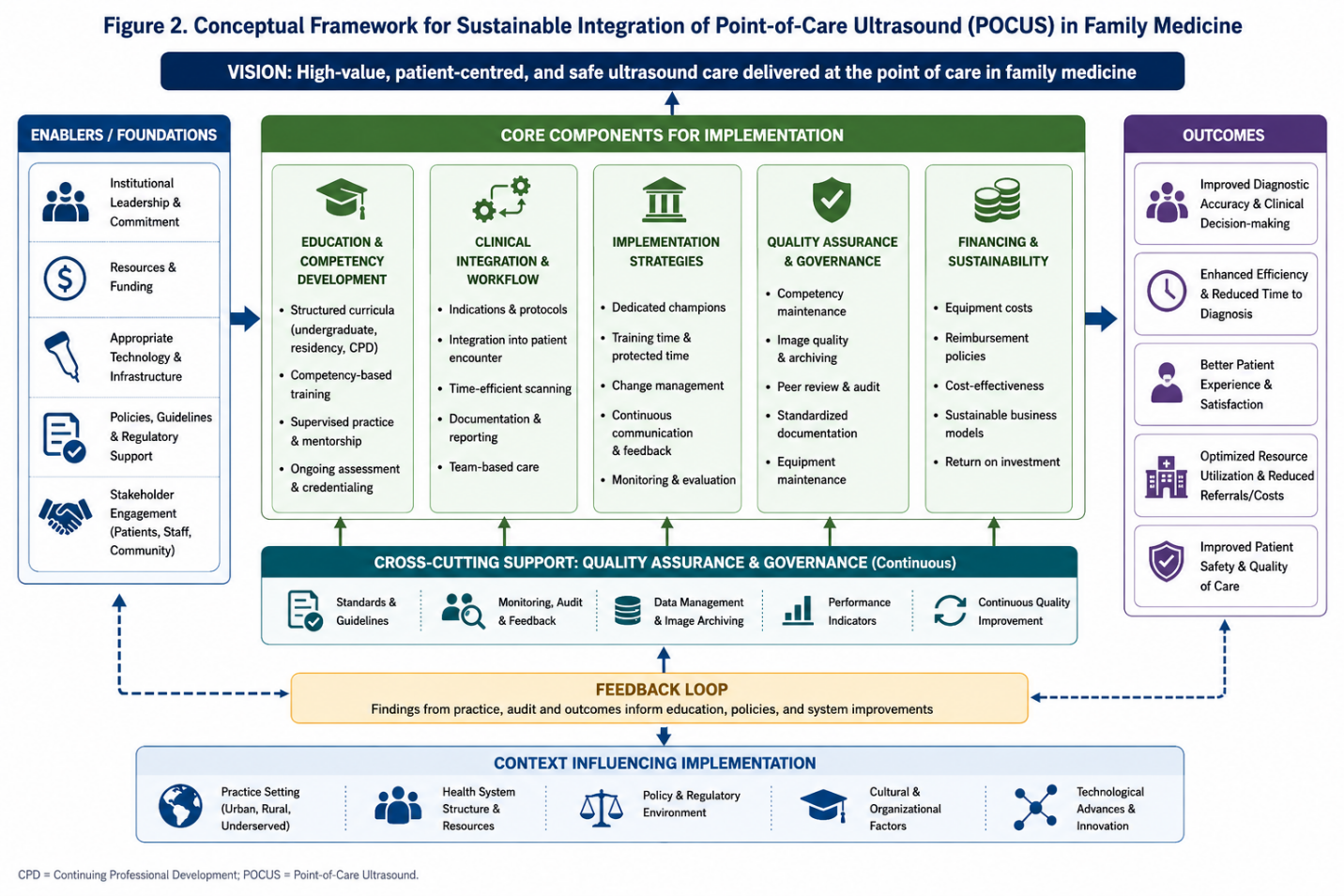
Figure 2.Conceptual framework for the sustainable integration of point-of-care ultrasound (POCUS) in family medicine. The framework illustrates the interrelationship between physician competency, education, implementation strategies, governance, quality assurance, institutional support, and technological innovation required for successful and sustainable integration of POCUS into family medicine practice.
4. Discussion
4.1 Principal Findings
In this narrative review we have brought together current evidence on how point-of-care ultrasound (POCUS) is being used in family medicine. Our synthesis covers five interconnected areas: clinical application; physician competency and education; implementation; quality assurance and governance; and emerging technologies. Across the studies, a clear picture emerges of POCUS moving beyond its role as an adjunct diagnostic tool to become a vital part of comprehensive primary care.
The evidence indicates that successful integration requires more than technology; it depends on coordinated effort in training, institutional support and sound governance (3, 5, 6, 8).
A principal finding is the widening clinical scope of POCUS in family medicine. Family physicians increasingly use focused ultrasound across musculoskeletal, respiratory, abdominal and cardiovascular presentations, as well as for preventive screening and office procedures. This is unsurprising given that family physicians manage undifferentiated presentations and provide longitudinal care; rapid bedside imaging supports the physical examination and accelerates decision-making. It is an extension of, rather than a replacement for, full diagnostic imaging (5–7, 9).
Physician education emerges as the foundation of safe practice, which is predicated on structured residency programmes, supervised experience and ongoing professional development. Ready access to technology is not sufficient; an educational system that fosters lifelong learning and objective assessment is essential. This reflects a shift from introductory courses toward more thorough competency-based frameworks (10–12).
Implementation is as much a health-system issue as an individual one. Even as portable devices increase access, success is tied to institutional leadership, faculty development, administrative support and appropriate reimbursement. Adding POCUS is best understood as organizational change rather than equipment procurement; systems that address financial and governance considerations fare better than those focused on acquisition alone (4, 13, 14).
We also note growing emphasis on governance and quality assurance. As POCUS use expands, the reviewed studies consistently call for oversight, peer review, credentialing and standardized documentation and image archiving integral to the process rather than administrative afterthoughts (8, 12, 14).
Technological innovation is likewise reshaping the field. Handheld units, tele-ultrasound and AI-assisted interpretation open new possibilities for training and diagnosis, but the consensus is that they should complement rather than supplant clinical expertise, supported by strong educational programmes and evidence-based strategies (5, 6, 15).
Overall, POCUS has matured into an important component of family medicine, and its continued development will depend on balancing the technology, physician skill and organizational readiness to govern it appropriately.
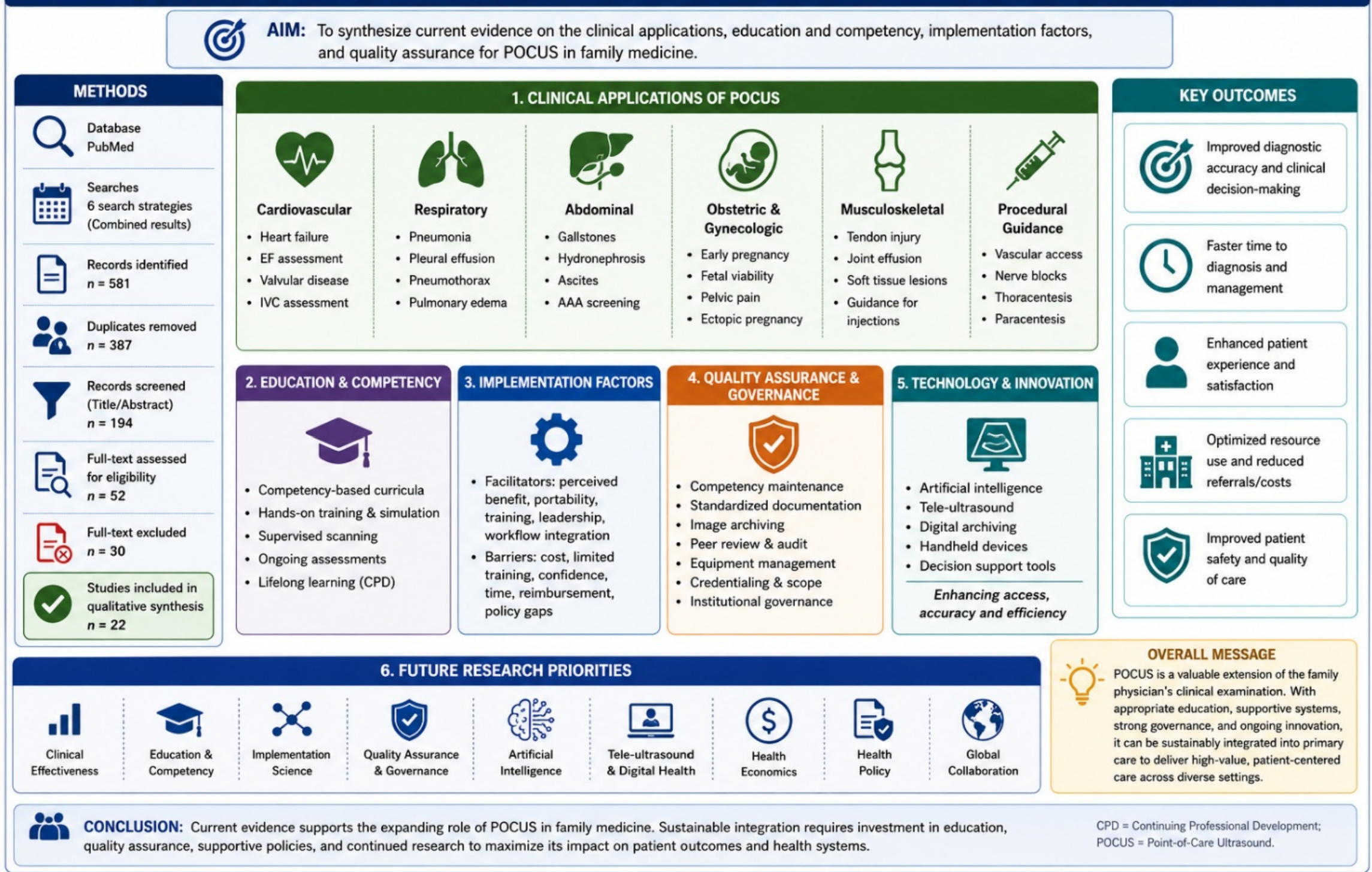
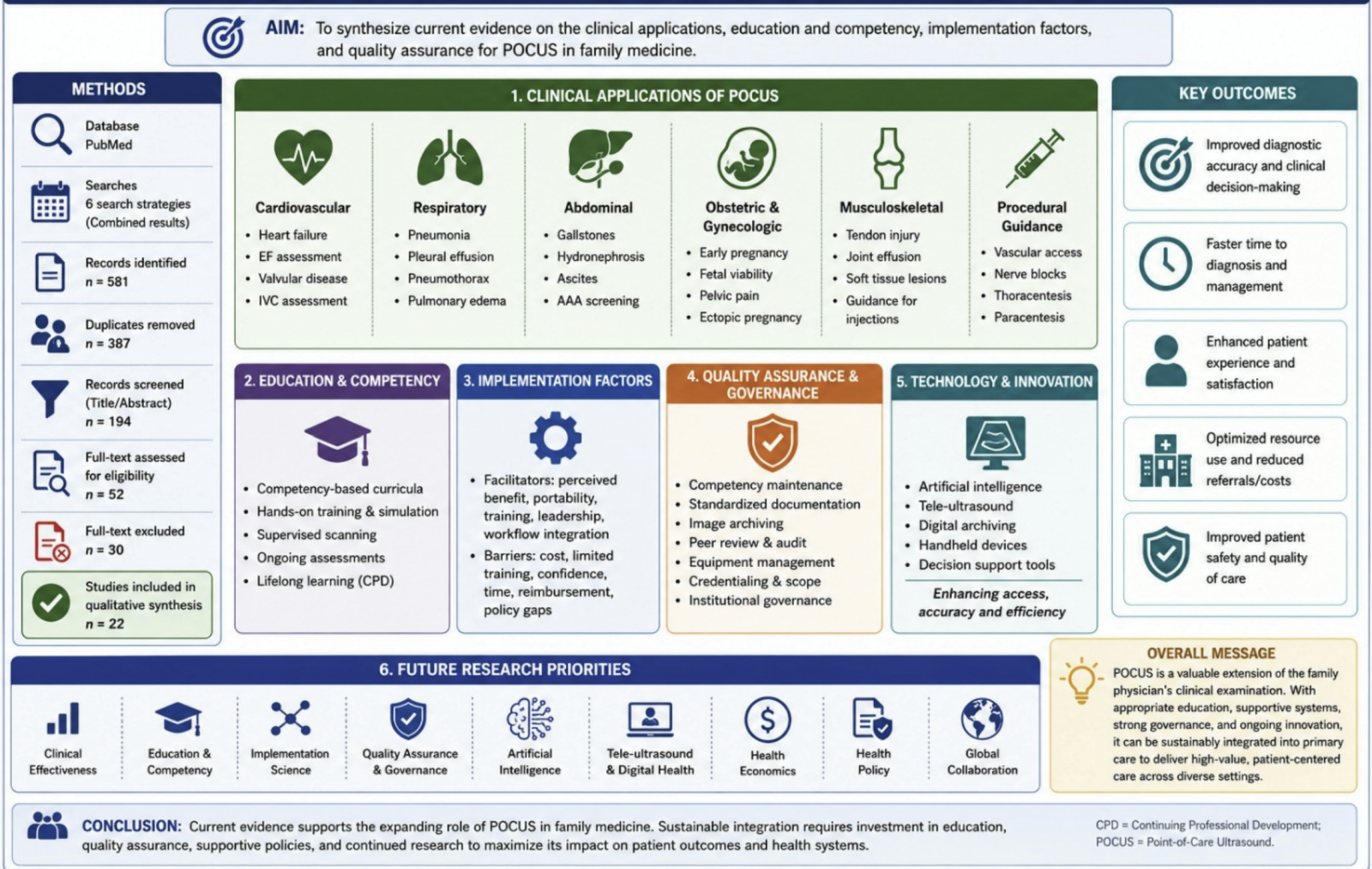
Figure 3.Graphical summary of the narrative review of point-of-care ultrasound (POCUS) in family medicine. The figure summarizes the principal themes synthesized in this review, including clinical applications, physician education, implementation, quality assurance, governance, emerging technologies, and future research priorities.
4.2 Comparison with Existing Literature
Our findings align with the growing body of evidence positioning point-of-care ultrasound (POCUS) as a vital part of modern family medicine. Earlier work and specialty reviews have documented the diagnostic and procedural value of clinician-performed ultrasound in primary care, but have largely been confined to particular organ systems or educational programmes. Our review takes a more holistic view, integrating clinical practice, implementation science, governance and emerging technology within a single analytical framework (3, 5, 8).
A notable shift in the literature is the evolution of POCUS from a procedural add-on to a genuine tool for clinical decision-making. Older studies demonstrated that family physicians could acquire the technical skills for a focused examination; more recent work situates POCUS within routine care, from preventive screening to longitudinal management a change attributable to greater clinician confidence as technology and institutional support have matured (6, 7, 9, 10).
There is also an international maturation in what is required for safe practice. Although residency structures vary between countries, the reviewed studies agree that physician preparation must rest on competency-based curricula and supervised practice rather than an introductory workshop, consistent with position statements from major family medicine bodies (11, 12, 16).
System readiness is another point of convergence. Earlier papers often emphasised physician skill alone, whereas current evidence highlights the need for organizational leadership, reimbursement and quality assurance a wider systems approach recognising that neither training nor equipment alone yields sustainable results (4, 13, 14).
Governance is a further area of development. Where earlier work emphasised technical performance, recent studies focus more on credentialing, peer review and image archiving. POCUS is no longer an emerging novelty but an established practice requiring the formal oversight expected of any diagnostic modality (8, 12, 14).
Finally, new technology AI, tele-ultrasound, handheld devices and digital platforms has opened new avenues for support, particularly in underserved areas. The consistent message, however, is that these should augment rather than supplant physician expertise and rigorous education (5, 6, 15).
Overall, our review advances an evidence-informed case that POCUS integration depends on the interplay of clinical and educational quality, governance and innovation. Considering these together, rather than in isolation, offers a more complete picture for those shaping policy and research in primary care.
4.3 Implications for Clinical Practice, Medical Education, and Health Policy
These findings carry weight for the continued integration of point-of-care ultrasound (POCUS) in family medicine. As the remit of primary care grows, family physicians face increasing pressure to deliver efficient, patient-centred care within short consultations and across a wide case-mix. Our synthesis indicates that POCUS can sharpen bedside assessment, improve procedural precision, support preventive screening and expedite decision-making provided it is used as part of a thorough clinical evaluation rather than as a stand-alone technology (5–7).
There is a clear case for competency-based training across the continuum of medical education. Residency programmes should introduce ultrasound instruction progressively, combining theory and simulation with supervised scanning and workplace-based assessment. For those already in practice, professional development should offer accessible means to maintain and periodically re-evaluate skills. Such measures would reduce variability in physician preparedness and improve consistency across systems (10–12, 16).
The healthcare organization is equally important. The evidence is clear that a successful POCUS programme requires institutional support for equipment, faculty, image archiving, technical support and quality assurance. It should be treated as an organizational effort involving workflow and governance rather than simply the purchase of new machines, so that patient safety and clinical quality are upheld (3, 4, 14).
On the policy side, as clinicians perform more of their own ultrasound, professional bodies and policymakers should establish credentialing, reimbursement and standards to ensure safe and equitable practice. Consistent national guidance would strengthen public trust and widen access, and reimbursement should reflect the true value of POCUS and the resources required to maintain equipment, document appropriately and train staff (8, 13, 14).
Balance is also required with new technology. Handheld units, tele-ultrasound and AI-assisted interpretation can extend expertise to underserved and rural areas, but must be governed by structures that prioritise physician competence and data security. They are enablers of good care, not substitutes for sound clinical judgement and the evidence base (5, 6, 15).
Ultimately, the success of POCUS in family medicine will require clinicians, educators, organisations and policymakers to act in concert, investing simultaneously in education, infrastructure and technology so that its role can expand safely, accountably and at a high standard of quality.
4.4 Strengths and Limitations
This narrative review has several strengths. It provides a more complete picture of the determinants of successful POCUS integration than reviews focused on clinical applications or education alone, uniting five domains that are often treated separately: clinical use; education and competency; implementation; quality assurance and governance; and emerging technologies.
A further strength is the breadth and transparency of our approach. From the initial search to the final synthesis, we applied a consistent and clearly described method for identifying and selecting the literature, capturing innovation and implementation as well as clinical relevance. The variety of study designs included allows POCUS to be examined from clinical, organizational and policy perspectives.
We also prioritised recently published studies addressing portable technology, AI-assisted ultrasound, reimbursement and competency-based education, so that our findings reflect current trends that older reviews may have missed.
Several limitations should be borne in mind. Our search was confined to PubMed; although it covers the major biomedical journals in this area, relevant work indexed in other databases may have been missed, and a future review with a wider search may be warranted.
The included studies were methodologically heterogeneous, differing in populations, settings, outcome measures and interventions. As a narrative review, our synthesis is qualitative and interpretive: it is well suited to integrating diverse evidence but does not permit formal statistical comparison or pooled effect estimates, and the identification and selection of studies inevitably involves a degree of author judgement.
The literature also consisted largely of surveys, observational work and programme evaluations, with few large prospective or randomised multicentre studies; conclusions regarding economic impact or long-term patient outcomes therefore remain provisional. Given the pace of change in POCUS, this review will require periodic updating.
Nonetheless, the consistency of our findings across healthcare systems and study types lends confidence to them. On balance, the evidence makes a strong case for POCUS as a vital part of modern family medicine and indicates where research and policy should be directed next.
4.5 Future Research Directions
This review makes clear that point-of-care ultrasound (POCUS) is now a well-established part of family medicine, while also revealing important evidence gaps that must be addressed for its full integration into primary care.
First, robust evidence on the long-term clinical impact of POCUS is needed. Many studies report gains in diagnostic confidence, decision-making and procedural guidance, but few examine whether these translate into tangible patient-centred outcomes such as treatment effectiveness, quality of life, satisfaction or disease management over time. Well-designed multicentre prospective studies in diverse primary care populations are required (5, 7, 8).
Second, education would benefit from greater standardisation. Although competency-based learning is the preferred approach, considerable variance exists in how curricula are structured, competencies benchmarked and certification handled. International cooperation between professional and accreditation bodies may be needed to establish harmonised standards ensuring consistent physician skill across systems (10–12).
Third, implementation science deserves attention. While organizational leadership, support and reimbursement are recognised as important, few studies examine implementation strategies in everyday practice. Future work should identify scalable and sustainable models across urban and resource-poor settings (4, 13, 14).
Fourth, emerging technologies raise new questions. Handheld devices, tele-ultrasound and AI-assisted interpretation show promise, but high-quality data on their performance, ethics and cost-effectiveness in family medicine are lacking. Research should determine how to incorporate these tools responsibly while preserving physician oversight and judgement (5, 6, 15).
Fifth, the economics of POCUS remain under-studied. Rigorous evaluation of return on investment, equipment and training costs, and referral patterns would assist those planning viable ultrasound programmes (8, 13, 14).
Finally, greater methodological standardisation and cross-border collaboration are needed. Heterogeneity in study design and reporting hampers comparison; internationally recognised core outcome measures and reporting guidelines would strengthen the evidence base and facilitate translation into practice.
Taken together, these priorities chart a course for strengthening the case for POCUS in family medicine, supporting better governance, stronger education and, ultimately, a higher standard of care as clinician-performed ultrasound continues to evolve.
Table 6. Future research priorities for POCUS in family medicine.
Research Domain
Current State of Evidence
Priority Research Needs
Expected Impact
Clinical Effectiveness
Evidence supports improvements in diagnostic confidence, procedural guidance, and bedside decision-making; however, long-term patient-centred outcomes remain limited.
Large multicentre prospective studies evaluating diagnostic accuracy, patient outcomes, healthcare utilization, and quality of life.
Stronger evidence to guide clinical practice and improve patient-centred care.
Medical Education
Competency-based education is increasingly adopted, but substantial variability exists in curricula, assessment methods, and certification standards.
Development and validation of standardized international curricula, competency frameworks, and assessment tools.
Greater consistency in physician training and competency across institutions and healthcare systems.
Implementation Science
Multiple implementation barriers and facilitators have been identified, but few studies evaluate long-term programme sustainability.
Evaluation of implementation models, organizational readiness, change management strategies, and programme sustainability across diverse healthcare settings.
More effective and sustainable integration of POCUS into routine family medicine practice.
Quality Assurance and Governance
Governance frameworks are evolving, but standardized quality assurance systems remain inconsistent across institutions and countries.
Development and validation of standardized quality indicators, credentialing systems, peer-review models, and governance frameworks.
Improved patient safety, accountability, and consistency in ultrasound practice.
Artificial Intelligence
AI-assisted image acquisition and interpretation show considerable promise but remain at an early stage of implementation within primary care.
Prospective evaluation of diagnostic performance, clinical effectiveness, ethical considerations, physician acceptance, and patient outcomes associated with AI-assisted POCUS.
Safe integration of artificial intelligence into routine clinical decision-making while maintaining physician oversight.
Tele-ultrasound and Digital Health
Emerging evidence supports remote supervision, mentorship, and education, particularly in underserved settings.
Evaluation of tele-ultrasound platforms, digital learning environments, cloud-based image review, cybersecurity, and cost-effectiveness.
Expanded access to ultrasound expertise, improved physician education, and reduced geographical disparities in healthcare delivery.
Health Economics
Limited evidence exists regarding long-term cost-effectiveness, reimbursement, and financial sustainability of POCUS programmes.
Comprehensive economic evaluations examining equipment costs, physician training, healthcare utilization, referral patterns, and return on investment.
Evidence-informed healthcare planning and sustainable resource allocation.
Health Policy
Policy development is progressing, but reimbursement models, accreditation standards, and national implementation strategies remain variable.
Comparative policy research evaluating reimbursement systems, credentialing pathways, and regulatory frameworks across healthcare systems.
More consistent national and international policies supporting safe and equitable POCUS implementation.
Global Collaboration
Research methodologies, outcome measures, and reporting standards remain heterogeneous across published studies.
Development of internationally agreed reporting standards, core outcome sets, multicentre collaborations, and harmonized research methodologies.
Improved evidence quality, greater comparability across studies, and accelerated advancement of POCUS research worldwide.
5. Conclusion
In this narrative review we have synthesised current evidence on how point-of-care ultrasound (POCUS) is being integrated into family medicine. The evidence indicates that POCUS is no longer merely an imaging adjunct but has become a vital part of clinical assessment in its own right, supporting diagnostics, procedural work, preventive screening and patient management in primary care.
The literature makes clear that the growing prominence of POCUS is as much a story of progress in physician training, health policy and clinical governance as of new portable technology. For integration to be both effective and sustainable, our findings point to the need for coordinated effort across several fronts: structured, competency-based education; supervised hands-on experience; quality assurance; institutional support; and appropriate reimbursement. Ultimately, a clinician’s ability to use ultrasound effectively over the long term depends on organizational and educational readiness as much as on the innovation of the device itself.
Author Contributions
FSZA and AKA contributed to the conceptualization, methodology, and project administration of the review. AKA, AAHAH, NNA, MHA, ZSHA, and STSA were responsible for data curation, literature investigation, and writing the original draft sections. SMA, JAMA, MNMA, RSA, AMA, and EMHM performed the formal analysis and validation of the synthesized data. FSZA provided overall project supervision. All authors contributed to writing review and editing, and have read and agreed to the final version of the manuscript.
Declarations
Funding.This research received no specific grant from any funding agency in the public, commercial, or not-for-profit sectors.
Conflicts of Interest.The authors declare that they have no conflicts of interest.
Data Availability.Data sharing is not applicable to this article, as no new datasets were generated or analysed. All studies discussed are available in the cited published literature.
Ethics Approval.Ethics approval was not required, as this study is a narrative review of previously published literature and did not involve human participants or animals.
References
1. Myklestul HC, Skonnord T, Brekke M. Point-of-care ultrasound (POCUS) in Norwegian general practice. Scand J Prim Health Care. 2020;38(2):219–225. doi:10.1080/02813432.2020.1753385.
2. Løkkegaard T, Todsen T, Nayahangan LJ, Andersen CA, Jensen MB, Konge L. Point-of-care ultrasound for general practitioners: a systematic needs assessment. Scand J Prim Health Care. 2020 Mar;38(1):3-11. doi: 10.1080/02813432.2020.1711572. Epub 2020 Jan 20. PMID: 31955658; PMCID: PMC7054965.
3. Capizzano JN, O’Dwyer MC, Furst W, Plegue M, Tucker R, Theyyunni N, et al. Current state of point-of-care ultrasound use within family medicine. J Am Board Fam Med. 2022;35(4):809–813. doi:10.3122/jabfm.2022.04.220019.
4. Carrera KG, Hassen G, Camacho-Leon GP, et al. The benefits and barriers of using point-of-care ultrasound in primary healthcare in the United States. Cureus. 2022;14(8):e28373. doi:10.7759/cureus.28373.
5. Tierney DM, Shen-Wagner J, Dalal P. Outpatient point-of-care ultrasound. Med Clin North Am. 2025;109(1):203–216. doi:10.1016/j.mcna.2024.06.004.
6. Hui W. An academic family physician’s point-of-care ultrasound (POCUS) experience. J Am Board Fam Med. 2025;38(6):949–954. doi:10.3122/jabfm.2024.240379R1.
7. Frasure SE, Dearing E, Burke M, Portela M, Pourmand A. Application of point-of-care ultrasound for family medicine physicians for abdominopelvic and soft tissue assessment. Cureus. 2020;12(8):e9723. doi:10.7759/cureus.9723.
8. LeFevre ML. Point-of-care ultrasound, prevention and screening in family medicine [editors’ note]. J Am Board Fam Med. 2025;38(6):1144–1147. doi:10.3122/jabfm.2025.250385R0.
9. Paulus R, Doughton J, Duffy M, et al. Validation of family medicine point-of-care ultrasound screening for abdominal aortic aneurysm. J Am Board Fam Med. 2025;38(6):1018–1025. doi:10.3122/jabfm.2025.250206R1.
10. Hall JWW, Holman H, Barreto TW, et al. Point-of-care ultrasound in family medicine residencies 5-year update: a CERA study. Fam Med. 2020;52(7):505–511. doi:10.22454/FamMed.2020.223648.
11. Johnson J, Stromberg D, Williams B, Greenberg N, Myers O. Point-of-care ultrasound for family medicine residents: attitudes and confidence. Fam Med. 2021;53(6):457–460. doi:10.22454/FamMed.2021.930080.
12. Homar V, Michels NR, Kucera M, Bednar J, Ortega Y, Andersen CA, et al. Point-of-care ultrasound teaching in general practice and family medicine: EURACT position paper. Eur J Gen Pract. 2026;32(1):2666751. doi:10.1080/13814788.2026.2666751.
13. Shen-Wagner J. Family medicine billing for point-of-care ultrasound (POCUS). J Am Board Fam Med. 2021;34(4):856–858. doi:10.3122/jabfm.2021.04.210187.
14. Long K, Bocobo G, Goldsmith A. Reimbursement and policy considerations of point-of-care ultrasound (POCUS) in rural family medicine. J Am Board Fam Med. 2026;38(6):967–973. doi:10.3122/jabfm.2025.240467R1.
15. Erickson ST. POCUS: is it time? … And is there time? J Am Board Fam Med. 2025;38(6):958–961. doi:10.3122/jabfm.2024.240422R1.
16. Bishop LR, Swanson J, Kiptui F, Shufflebarger EF, Crosby JC, et al. Development and implementation of a context-specific multi-modal point-of-care ultrasound curriculum for a Kenyan family medicine residency program. Cureus. 2024;16(12):e75655. doi:10.7759/cureus.75655.
17. Russell FM, Herbert A, Lobo D, Ferre R, Nti BK. Evaluation of point-of-care ultrasound training for family physicians using teleultrasound. Fam Med. 2023;55(4):263–266. doi:10.22454/FamMed.2023.469019.
18. Kiss-Kovács R, Morvai-Illés B, Tóth-Szeles R, Bakó I, Mohos A, Ambrus I, et al. Point-of-care ultrasound improves the diagnosis of heart failure in patients with dyspnea in primary care. Front Med. 2026;13:1721066. doi:10.3389/fmed.2026.1721066.
19. Micks T, Braganza D, Peng S, McCarthy P, Sue K, Doran P, et al. Canadian national survey of point-of-care ultrasound training in family medicine residency programs. Can Fam Physician. 2018;64(10):e462–e467.
20. Peng S, Micks T, Braganza D, Sue K, Woo M, Rogers P, et al. Canadian national survey of family medicine residents on point-of-care ultrasound training. Can Fam Physician. 2019;65(12):e523–e530.
21. Labonté M, Dion PM, Guérard-Poirier N, Saïd H, Chagnon N, Le May M, et al. Point-of-care ultrasound training for family medicine residents. Can Med Educ J. 2025. doi:10.36834/cmej.79607.
22. Sadikoglu T. Training family physicians in point-of-care ultrasound (POCUS): a Turkish perspective. J Am Board Fam Med. 2025;38(6):955–957.
keywords
Point-of-care ultrasound, Family medicine, Primary care, POCUS, Narrative review